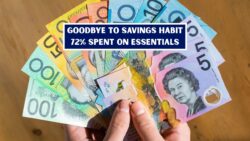
Many Australian families have quietly lost the ability to afford “affordable living.” People say that in 2026, they will be paying about $7,200 more each year just to keep up with their basic needs. This is without changing their lifestyle or spending more on purpose.

This isn’t about spending on luxuries or things you don’t need. It’s the rising costs of basic needs like housing, food, energy, insurance, and transportation. Even families that used to feel safe now say their budgets don’t stretch anymore.
This is where the extra $7,200 is coming from, who is most affected, and why it feels like the pressure never ends.

Where the extra $7,200 is coming from
Almost every important category shows an increase in households. The rises look like they can be handled on their own. When you put them all together, they are too much.
- Housing costs: $2,400 to $3,000 more (rent, rates, and strata go up)
- Food and groceries: up by $1,500 to $1,800.
- Utilities and energy: $900 to $1,200 more
- Insurance (for your home, car, and health): costs $700 to $1,000 more.
- Transportation and petrol: $500–$800 more
When you add these together, they cost many families about $7,200 a year, not including any extra spending.
The Australian Bureau of Statistics keeps track of data that shows that household spending on necessities is still rising faster than overall inflation, especially for food and housing.
Why It Feels Worse Than the Numbers Show
Families say that the stress isn’t just financial; it’s also mental.
- Costs going up all at once instead of slowly
- Pay raises not keeping up with set costs
- Not many “cheap swaps” left to make; savings being used for everyday costs
A parent from Brisbane said, “We already lowered everything. There’s nowhere else to cut now without it hurting.”
Who Is Being Hit the Most
While most families are feeling the pressure, some are taking the biggest hit:
- Renters who have to pay more every year
- Households with only one income
- Families with kids and the cost of childcare
- Older Australians who get a set amount of money each month
- Households in the region that pay more for transport
Even families with two incomes say they are falling behind, even though they work more hours.
Woolworths Is Under Pressure Again—Shoppers React
Jess, who works in hospitality in western Sydney, said that her rent increase alone took away her pay rise.
“I make more money than I did last year,” she said. “But I’m worse off. It doesn’t make sense until you see the bills.”

What the 12% increase in the Superannuation Guarantee means for retirees
Ron said, “We made plans for the holidays.” “Now savings pay for food.”
What the Government Is Saying
Government officials admit that costs are going up, but they point to targeted relief and wage growth.
A spokesperson said that support is being focused through tax changes, energy rebates, and payments made through Services Australia, as well as help from the states.
Mortgage Shock 2026: Why Australians Who Own Homes Are Getting Ready for Harder Months
Families say the help is real, but it’s not always easy to get and is often eaten up by rising costs.
Expert Insight: Why “Affordable” Is Going Away
Economists say that affordability is slowly going down.
- Say goodbye to Centrelink Top-Ups: One mistake costs $3,200 in missed payments.
- Housing costs take up most of a family’s budget.
- One-time help doesn’t make up for permanent price increases.
One analyst said, “Inflation alone isn’t the only thing that affects affordability.” It’s about not being able to pay for things that are unavoidable.
How Families Are Coping Right Now
Families are making changes, but they often come at a cost.
- Interest rates in Australia just changed again, and millions of families didn’t see it coming.
- Cutting back on savings contributions
- Using credit to make things easier
- Putting off medical, dental, or home repairs
- Putting in extra hours at work
Financial counsellors say these plans won’t work in the long run.
Things to Look Into If the Costs Are Too Much
If your family feels stretched in 2026, advisors suggest:
- Checking to see if you qualify for rebates and discounts
- Using current prices to rebuild budgets
- Getting free financial advice before your debt gets worse
Taking action early can stop short-term stress from turning into long-term damage.